Monday, February 26, 2018

Character Study

I analyzed my boyfriend, Kheland.
I asked his parents about his personality when he was a child up until right now and I had him take the same personality test that I took. I also asked him how he would describe his own personality and I'm going to give my opinion on what his personality is like. 
I asked both his mom and dad what he was like when he was little, an older kid, and now. Kheland's father described him as always being fun, laid back, loyal, and hard-headed. His mom used the words adventurous, brave, loving, and hard-headed also for when he was a kid and words she would use now that he is a young adult are loud, easy-going, compassionate, considerate, reliable, giving, and that he has a big heart. I agree with what both of his parents said and then some. 
I made him take one of the personality tests that was offered to us to take because I thought it would result in something interesting. The test was 120 questions and it was based on the Five-Factor Model of Personality. Kheland scored a 6 in openness and I see and understand why that score is so low. He isn't really into trying a lot of new things and he doesn't enjoy going out and doing spontaneous things either. His Conscientiousness score was average. I don't understand this score that he received because he can be lazy and a procrastinator when it comes to school work or getting things done in a timely fashion. He does have goals and obviously does what to achieve them, but does not always go about it in the way that someone should. I believe him to be an introvert and his Extraversion scored proved that to be correct. He is only loud and will only carry on conversations with people that he is comfortable with like family and close friends. This goes along with his openness score and not wanting to go out and do new things. His Agreeableness score was also pretty average because he works well with others to an extent like if he has to for a school project or at work. He fits into the agreeable category well because he also hates being called out on things and hates when he is confronted and initiating confrontation. Lastly, his Neurocitism score was on the high end of average. Kheland does not respond to stressful situations very well and he has a pretty bad temper and sometimes has a hard time controlling it. Seeing that his score was so high is also a little surprising to me because he is usually positive and will try to look at the good side of things and will encourage others to do the same. 
I hope that these pictures give a glance at what is personality is like. Once he has opened up to you he is funny and will constantly have you laughing. He is very caring and protective of his baby sister who is 2 and a half. She has total power over him and he would do anything for her. He is so loving towards everyone. Kheland has some negative traits too like everyone else. He can be very controlling, forgetful, and selfish but I know that he usually means well.

Saturday, February 24, 2018

Personality Assessment

Your behavior, thoughts, and feelings are all characteristics that form your personality. Your traits suggest stability and consistency. The most basic traits that stay the same over a period of time are the traits that go to form your personality. The Five-Factor Model of Personality puts five major traits together collectively and we use the acronym OCEAN to remember the five. OCEAN stands for Openness, Conscientiousness, Extraversion, Agreeableness, and Neuroticism. People are all different and have different personalities so when testing a person under these categories. Someone might score higher in extraversion and agreeableness, but lower in neuroticism. The five major traits have subcategories because if it were just based off of that one word and that words synonyms than it would not be as accurate, so there are other personality traits that are more detailed and broaden our understanding of personality. 
My scores for The Five-Factor Model of Personality was interesting and I mostly agree with the results that I received. My Extraversion score was 14 and the two highest subcategories were assertiveness and friendliness. I expected this score to be lower because I like be alone and don't get me wrong I love spending time with friends and family I just do not seek out exciting, out-going things. My Agreeableness score was 33 and I scored higher in cooperation and modesty in the subcategories. I'm not really surprised by this score either, I like the peace to be kept and I don't like conflict. My scores for Neuroticism and Conscientiousness were 60 and 61 and that makes these two my highest scoring of the five major traits. The Neuroticism score scares me a little because I think of it as being negative, but its scored on emotional reactivity and how well you respond to stress and how you deal with certain things. I expected my conscientiousness score to be one of my higher scores because I like to be on-time and well organized. My Openness score was 1. I agree partially with this score because I do like to try new things and do new things, but at the end of the day I will take my routine and practicality over flying by the seat of my pants. 

Sources:

Monday, February 19, 2018

Understanding Development Across Life-Span

I expected Dr. Nadine Burke Harris's event to be much more than it actually was. I mean not that it wasn't a big day for her and the people that shes able to help. But the only thing that happened in the day that changed her ENTIRE career was a colleague bringing her a research study, but it happened to be exactly what she needed. The study was done over Adverse Childhood Experiences and things that fall into that category are abuse, parental separation, and substance abuse and every single one of those things effect a child's brain development. That day was so significant to Dr. Harris because it opened up all new doors for her career and healthcare for children. The initial study was performed by two other doctors on 17.5 thousand adults. They asked them questions about adversity and they later named it The ACE test. The test is fairly simple, it contains 10 yes or no questions, and can be performed at any routine check-up or physical.
Dr. Harris uses the simple test when assessing all of her patients because it gives her a better understanding of them and how to treat them better. When a child scores higher on the ACE test she automatically knows that the child will more than likely suffer from other severe health issues later in life. Health issues that could later be developed include lung cancer and heart disease because of the repeated amount of high stress at young ages caused by adverse experiences.
I had never heard about the ACE test until I watched Dr. Harris talk about it and I truly think its a great thing. It's so easy to use and its proven to be beneficial to children presently as well as in the long run. I took the test and I encourage you all to take it as well. I scored a three out of ten and that doesn't mean that I didn't have a good childhood or that I'm going to get a terrible disease, it just tells me that it could be possible because of adverse experiences I did have as a child. My boyfriend's score was 0 and my mother's score was one. If you guys take the test and you don't mind sharing your score comment and let me know because I'm curious.

Sources:
https://www.ted.com/talks/nadine_burke_harris_how_childhood_trauma_affects_health_across_a_lifetime?referrer=playlist-how_does_my_brain_work#t-268280
https://www.npr.org/sections/health-shots/2015/03/02/387007941/take-the-ace-quiz-and-learn-what-it-does-and-doesnt-mean

Monday, February 12, 2018

Sensation and Perception


Echolocation

How awesome is it that some animals can use a form of navigation without having to see?
This navigation is called echolocation, and it is defined as sound reflected off of objects.
Echolocation is used by dolphins, whales, bats, and humans are even learning how to do it to get around.

A person who has lost their sight or even someone who hasn't can learn to use echolocation to navigate their way through life as long as the person has normal hearing. The person will use clicks of the tongue, snaps of fingers, or stomps of the feet to the ground to make the desired sound. The mouth clicks are the most effective. Humans who use echolocation can use it to detect obstacles near them and then with more practice and training they are able to detect the distance, shape, material, motion, and the size of what is near them.

I chose this topic and it interested me because it is something that is special to some animals like bats and whales. Almost anything that deals with animals will interest me and I will want to learn about the topic. Bats are not blind even though the common saying, "blind as a bat" says otherwise. Bats are nocturnal and they do most of their flying and hunting at night so like humans they cannot see in the dark. They make a really high pitched noise that bounces off of the bug or the obstacle in front of them so that they can either catch it or not fly into something. When the sounds reach back to them they are able to map things in their vicinity.

Image result for whale from finding dory echolocation
Bailey, the beluga whale from the Pixar movie Finding Dory, uses echolocation throughout the movie to help his fishy friends. He is in the aquarium because he bumped his head and his echolocation wasn't working anymore. Towards the end of the movie he has to find a way to get over his issue and use his echolocation to find Dory so that she can return to the ocean. 

http://www.psychologicalscience.org/observer/using-sound-to-get-around


Sunday, February 4, 2018

Brain & Behavior

                                   Maps 


Mapping the brain.

The human brain is an extremely complex organ in the human body. There is also so much of the brain that has yet to be discovered and we are still trying to fully understand how it all works.

It "blows my mind" to think about how we do not know so much about our own brains. We all have one and we all use it every single day whether we realize it or not.

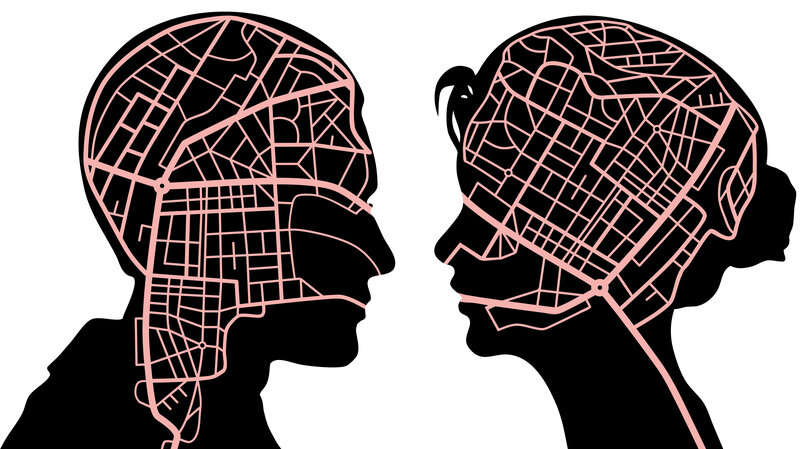
There is a scientist from The Allen Institute named Allan Jones and he is trying to understand the human brain better by creating a map. He gives an example that you understand a city so much better once you see a map, so maybe once there is a map or maps of the brain there will be greater understanding.

The process that Jones uses is very intricate, specific, and interesting. He seeks to use normal human brains with no physical damage, with no history of psychological issues, and a clean toxicology work up. The brains used for this study are also taken and the process begins within 24 hours.

They use MRI for the first look at the brains and this is the baseline that they work from until the end of the brains specific mapping. Here is a link to an Allen Institute site that allows you to click through and interact with the MRI images of brains used in this study... http://human.brain-map.org/mri_viewers/data

The brain is then frozen completely solid and sliced very thin to be put onto a microscope slide and dyed so that it is able to be seen. Then someone is able to go in and view the different parts of the brain and start to try to make connections with things and find locations of others and understand how things work. And then the process is repeated over and over again.

I find this so interesting because there is so much information that could be found. The process has extremely specific criteria and I find that important so that what information that is found by these scientists is not jeopardized by some small thing that could have been prevented. Watching videos and reading about this made me think and wonder what my brain looks like at the microscopic level and how science is just now starting to discover what we all look like at that level.

Here is another link to The Allen Institute that gives more information on what they do and how...http://www.alleninstitute.org/what-we-do/brain-science/research/products-tools/

Final Reflection

During this psychology course we went over and covered many different topics such as the brain, behavior and learning as well as doing tasks...